
Most babies born full term are developmentally ready to start weaning around 6 months of age. Signs of weaning readiness include:
- Motor – Baby is able to sit with minimal support and hold their head upright and steady in sitting (for about 15 minutes).
- Coordination – Baby can coordinate eyes, hands and mouth and is able to look at an object or food, pick it up, and bring it to their mouth.
- Swallowing – Baby’s tongue thrust reflex has integrated and they are able to move food to the back of their mouth to swallow instead of reflexively pushing food out of their mouth with their tongue.
- Interest – Baby shows interest in your food and watching you eat.
However, weaning doesn’t truly start at 6 months of age or begin with the first spoonful of puree or small fist of squished avocado – it begins at birth. You can support your baby’s weaning journey by providing experiences from early on to help your baby be ready when the time comes for solid foods.
1. Tummy Time
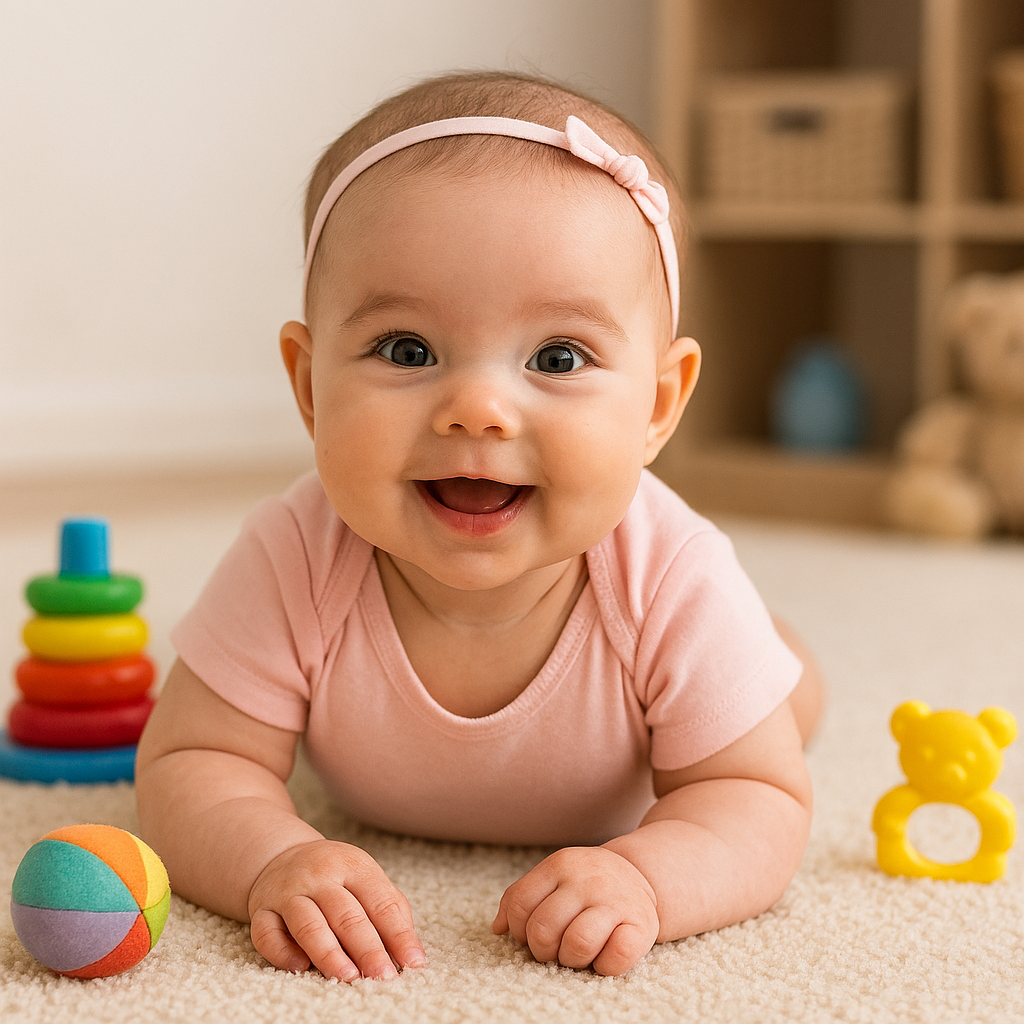
Spending time on their tummy helps babies strengthen the muscles in their neck, shoulders, back, and core. This muscle development is foundational for achieving motor milestones, including head control and sitting, and is a key component of being ready to wean.
Beyond physical strength, tummy time also promotes coordination of smaller muscles, including the muscles of respiration and postural control, which is critical as babies transitions from milk to solid foods.
2. Sensory Play
Eating is a sensory experience that starts with the smell and visual appearance of food. Once in a baby’s mouth, the feel of food varies greatly depending on texture and can range from very loud to almost silent when being chewed and swallowed. Babies need plenty of time with sensory play to prepare their body for the sensory experience of eating.
At first your newborn will engage in sensory activities passively as they take in the sights, smells, sounds and textures around them; however, it won’t take long for your baby to become an active sensory explorer.
Try these ideas for sensory fun with your baby:
- Use high contrast black and white images and shapes around your baby’s play area.
- Place floating toys in the bath so your baby can watch them move in response to splashing.
- Provide opportunities to explore baby books, blankets and toys, and other baby-safe household items that are made out of a variety of materials and textures.
- Explore water, grass, sand and baby-safe finger paint with feet and hands.
- Use hands to explore play containers full of dried oats, cereal flakes or cooked, cooled pasta.
- Have fun shaking and banging baby musical toys or shake and bang non-musical toys to experiment with the sounds they make.
- Explore using olfactory senses by offering different spices and foods for your baby to smell while you are cooking.
- Place ice cubes in a container of warm water, and let your baby feel with their hands the contrast of the cold ice floating in the warm water.
- Create different sensory boxes for you and your baby to explore together. Ideas include:
- Toy box – toys and teethers of different colours, shapes, and textures.
- Ball box – toy balls of different colours, shapes, and textures.
- Kitchen box – oven mitt, sponge, wooden spoon, spatula, and whisk.
- Bathroom box – tissue, toothbrush, loofa, wash cloth.
3. Opportunities for Oral Exploration
Between 12 to 14 weeks gestation, an embryo starts getting their body ready for milk feeds by swallowing amniotic fluid. This practise with swallowing continues for the remainder of the pregnancy and, once born, transitions to functional breast and/or bottle feeding.
Babies need time getting their body ready for solid foods too, and the way they do this is through oral exploration of teethers, baby toys and other baby-safe objects. Between 3 and 4 months of age, babies discover their hands and realise that they can bring their hands to their mouth (and chew on them!). This mouthing behaviour intensifies between 4 and 6 months of age when babies start to bring toys and other objects to their mouth.
All of this oral exploration is key for preparing a baby’s mouth to manage food. Help your baby prepare for solid foods by providing a variety of teethers and baby-safe objects for them to hold, bring to their mouth and chew. Offer baby-safe items that are different shapes and sizes and are a variety of textures – soft/smooth, bumpy/ridged, firm/elastic, hard/smooth, fabric/crinkly, etc.
4. Practise Time in the Highchair
Provide your baby with opportunities to sit in and get used to their highchair before they start to wean. Baby can sit in their highchair and watch you cook or play with some toys on their highchair tray. The more comfortable they are with being in their highchair, the more comfortable they will be with being in the highchair when it comes to time to wean.
5. Time Spent Watching Others Eat
Babies learn by watching others. Include your baby in family mealtimes from a young age by having them in a baby seat at the table or in your arms. It is important that your baby get comfortable with the smell of family foods and have plenty of time watching family members enjoy eating. By watching you eat, your baby learns what to do with food (put it in their mouth) and how to manage the food once it is in their mouth (chew!).
If you have questions about children’s feeding or concerns for your child, please get in touch; and please sign up for the South Lakes Speech & Language Therapy newsletter if you would like future posts sent directly to your inbox.
Please note that this article is for information purposes only and was written with typically developing babies and children in mind. If your baby has a medical or developmental condition that impacts their readiness for weaning and/or puts them at increased risk for feeding issues, please speak with your baby’s healthcare provider before progressing with weaning or making any changes to their feeding routine.