
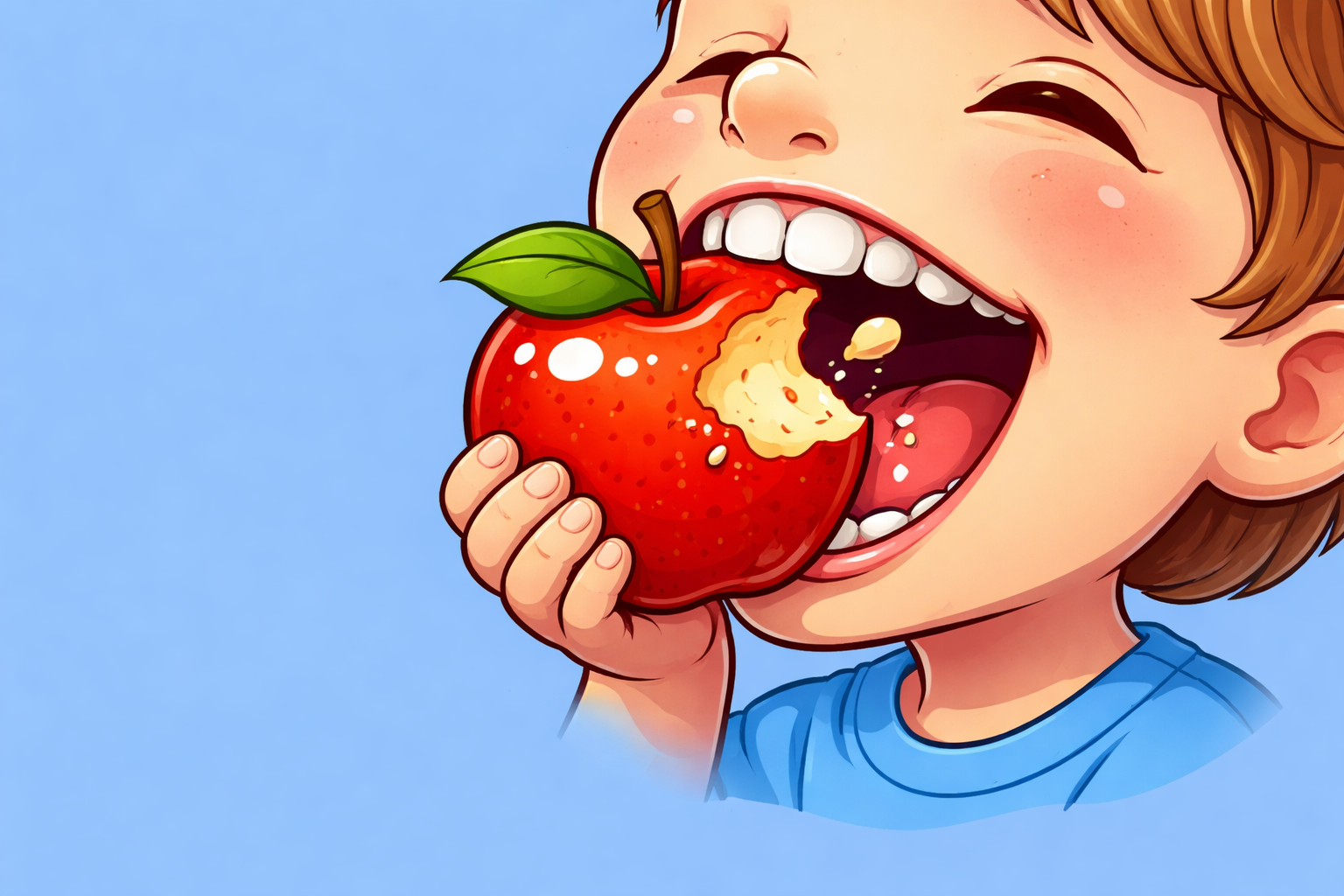
Developing an adult chewing pattern, or a rotary chew, is a milestone that, when feeding is going well, usually goes unnoticed. That is because despite being a big milestone, it is hidden in everyday moments and gradual food transitions. Chewing skills develop in a predictable, hierarchical pattern and are crucial for managing the whole spectrum of foods we find on our dinner plate.
Chewing Skills By Age
The table below shows what chewing skills are typically seen at particular ages; some children move through the chewing hierarchy more slowly. Regardless of where your child is with their chewing skills, it is important to offer foods that are appropriate for their skill level; keep in mind, this may be different than what is suggested based on their age.
| Age | Skill | Description | Skill Appropriate Foods Child can Chew & Swallow |
| 0 to 6 months | Phasic Bite | Reflexive rapid vertical jaw movement when pressure is applied to the gums. | Milk |
| 6 to 9 months | Vertical Munch | Voluntary vertical jaw movement. | Puree* Meltables* |
| 9 to 15 months | Diagonal Chew | Diagonal jaw movement when chewing. | Soft cubes* Soft Mechanicals* |
| 24 to 36 months | Rotary Chew | Circular jaw movements when chewing (adult chewing pattern). | Hard Mechanicals* |
How Can I Help My Child Develop Chewing Skills?
Learning to chew starts in infancy and progresses as your child explores new foods and textures. You can support chewing skill development through:
- Tummy Time – Babies need to develop core strength and head stability to later develop jaw control and graded chewing movements.
- Chewing Practice – Babies should start chewing practice as soon as they develop the coordination to pick up toys and bring them to their mouth. Offer baby safe toys and teethers of different sizes and textures on which your baby can practise chewing.
- Watching Others Chew – Babies and young children learn by watching others. Make sure your child has plenty of opportunities to watch you chew!
- Practice with Appropriate Foods – Babies and young children need lots of practice chewing on skill appropriate foods to coordinate their jaw and tongue and develop effective chewing skills.
Is My Child’s Chewing Delayed?
Children with feeding difficulties sometimes are struggling because their chewing skills are not fully developed. If you are concerned that this is the case for your child, seek out a feeding evaluation with a paediatric feeding therapist. As a part of assessing your child’s feeding, a paediatric feeding therapist will analyse your child’s chewing skills and make recommendations for feeding therapy to support your child’s development of chewing skills if appropriate.
If you have questions about children’s feeding or concerns for your child, please get in touch. Follow us on Facebook for more speech, language and feeding tips and sign up for South Lakes Speech & Language Therapy’s newsletter if you would like new posts sent directly to your inbox.
Please note that this article is for information purposes only and was written with typically developing babies and children in mind. If your child has a medical or developmental condition that puts them at increased risk for feeding issues, please speak with your child’s healthcare provider about appropriate foods to offer and any eating, drinking or swallowing concerns.
References:
- SOS Approach to Feeding Developmental Food Continuum.
- Morris, S.E. and Klein, M.D. (2000) Pre-Feeding Skills (2nd ed). Therapy Skill Builders.
- Bahr, D.C. (2001). Oral Motor Assessment and Treatment: Ages and Stages. Allyn and Bacon.
- American Speech-Language-Hearing Association Feeding and Swallowing Milestones.