Confused about which cup to choose for your child? There are a lot of options available, and while many make claims about being a step in the progression of feeding development, the truth is, only open cups and straw drinking are a true part of feeding development.
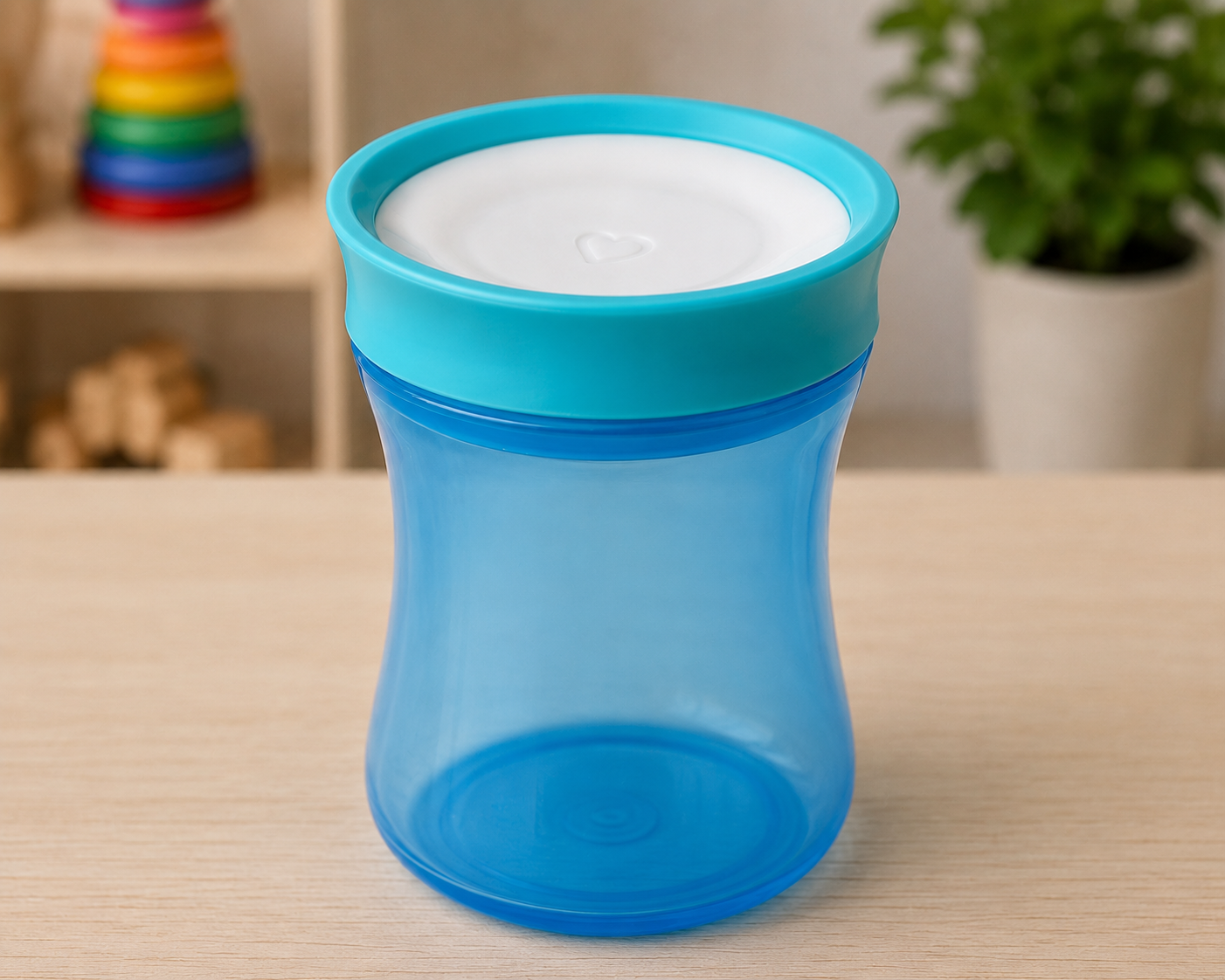
360 cups were designed to appeal to adults and our desire to limit the mess that accompanies early cup drinking. And while I definitely understand wanting to avoid mess when possible, developmentally there are good reasons to skip (or at least limit) the use of 360 cups.
Oral Motor Development is the Foundation for Functional Feeding
Did you know that the way a child sucks and swallows changes as they grow? When babies are born, they use an anterior-posterior tongue movement (from the front to the back of the mouth) for breast and bottle feeding; as they transition to solid foods, babies start to develop a mature swallow pattern. During a mature swallow, the tip of the tongue touches the roof of the mouth (just behind the top teeth) and makes the motion of a wave to propel food and liquid into the throat.
The problem with the 360 cup is that the patten of clamping down and sucking on the rim of the 360, places the tongue forward in the mouth instead of up to the roof of the mouth where the tongue needs to sit to effectively propel food and liquid into the throat as a part of a mature swallow. 360 cups also encourage a forward jut of the jaw and over extension of the top lip which is not compatible with open cup drinking and does not support normal swallow development or development of open cup drinking skills.
Oral Motor Development Supports Speech Skills
Feeding skills and speech skills develop in tandem and oral movements and patterns practised for one set of skills influences the other. Although use of a 360 cup is not directly tied to speech delay, it is important to be mindful of the oral patterns used with a 360 cup and the oral patterns needs for good speech production.
The forward tongue position, forward jaw jut and over extension of the top lip used when drinking from a 360 cup are not functional oral movements for speech production. The more practice a child has with putting their tongue behind their top teeth when using a mature swallow pattern (used when drinking from an open cup and through a straw) the more practice they are getting with moving their tongue in a way that supports correct speech sound development.
Other 360 Cup Considerations
An immature swallow pattern and potential for delayed speech sound development are the primary reasons speech, language and feeding therapists encourage parents to avoid or limit drinking from a 360 cup; however, there are other drawbacks to the 360 cup:
- The forward tongue position encouraged by 360 cup use can lead to an open mouth posture and excessive dribbling.
- The motor planning, hand-eye coordination and grading of cup movement children develop as a part of open cup drinking is much more advanced than the motor skills practised with 360 cup drinking.
- 360 cups teach children that liquid comes out in small amounts, and frequently children who are accustomed to 360 cup drinking struggle initially with the oral patterns needed to control the ‘normal’ volume of fluid they take from an open cup. Children that start with open cups, learn how to take controlled sips from the start.
- The small amount of fluid released by 360 cups encourages prolonged sucking on the cup and increases the time a child’s teeth are in contact with sugars and bacteria as a part of drinking. This can increase the likelihood of dental decay.
All this doom and gloom around 360 cups is not to say that all is lost if your child is a 360 cup user. While 360 cups are not ideal for a number of reasons, there is a place for occasional ‘no mess drinking’ and you’ve not irreparably damaged your child. Babies and young children tend to be flexible and resilient, and today is as good a day as any to start to transition your child away from a 360 cup. Your best two options (and the only options for learning true developmental drinking skills) are an open cup and straw drinking.
Happy drinking 🙂
If you would like more information about cup drinking or children’s feeding development, please get in touch. Follow us on Facebook for more speech, language, and feeding tips, and sign up for South Lakes Speech & Language Therapy’s newsletter if you would like new posts sent directly to your inbox.