If your child is receiving speech and language therapy, you may have heard the term ‘Total Communication,’ but have you thought about what that means? Before we delve into what a Total Communication Approach is and how it can support your child’s communication, I though I would share with you an interesting fact about communication (I do like random facts!). Only 7% of communication about feelings and attitudes takes place through spoken words!1 So how, you may ask, do we communicate the remaining 93% of the information?
Are you familiar with Albert Mehrabian’s 7-38-55 Communication Model? Mehrabian carried out a study in the 1980s which concluded that only “…7% of the meaning of feelings and attitudes takes place through the words we use in spoken communications, while 38% takes place through tone and voice and the remaining 55% of communication of these factors take place through the body language we use.”2
When you think about a toddler in the middle of a melt down, the 7-38-55 Communication Model makes sense; most of their emotional communication is not through words. Equally important is that the toddler is communicating in the way most accessable to them in that moment, which is the principle of Total Communication.
What Does a Total Communication Approach Involve?
Total Communication is an approach that supports individuals with communication difficulties to communicate in the way most accessible to them. All communication is valued and the focus is supporting functional communication for your child. A Total Communication Approach includes the nonverbal methods of communication studied by Mehrabian as well as other strategies that your child’s speech and language therapist will support you and your child to use. Not only does Total Communication support a child’s ability to communicate, it also supports their understanding of the communication that is happening around them.
What is Included in a Total Communication Approach?
A Total Communication Approach encompasses anyway your child may communicate including:
- Verbal and Vocal Communication: This includes the words your child says as well as the sounds he makes.
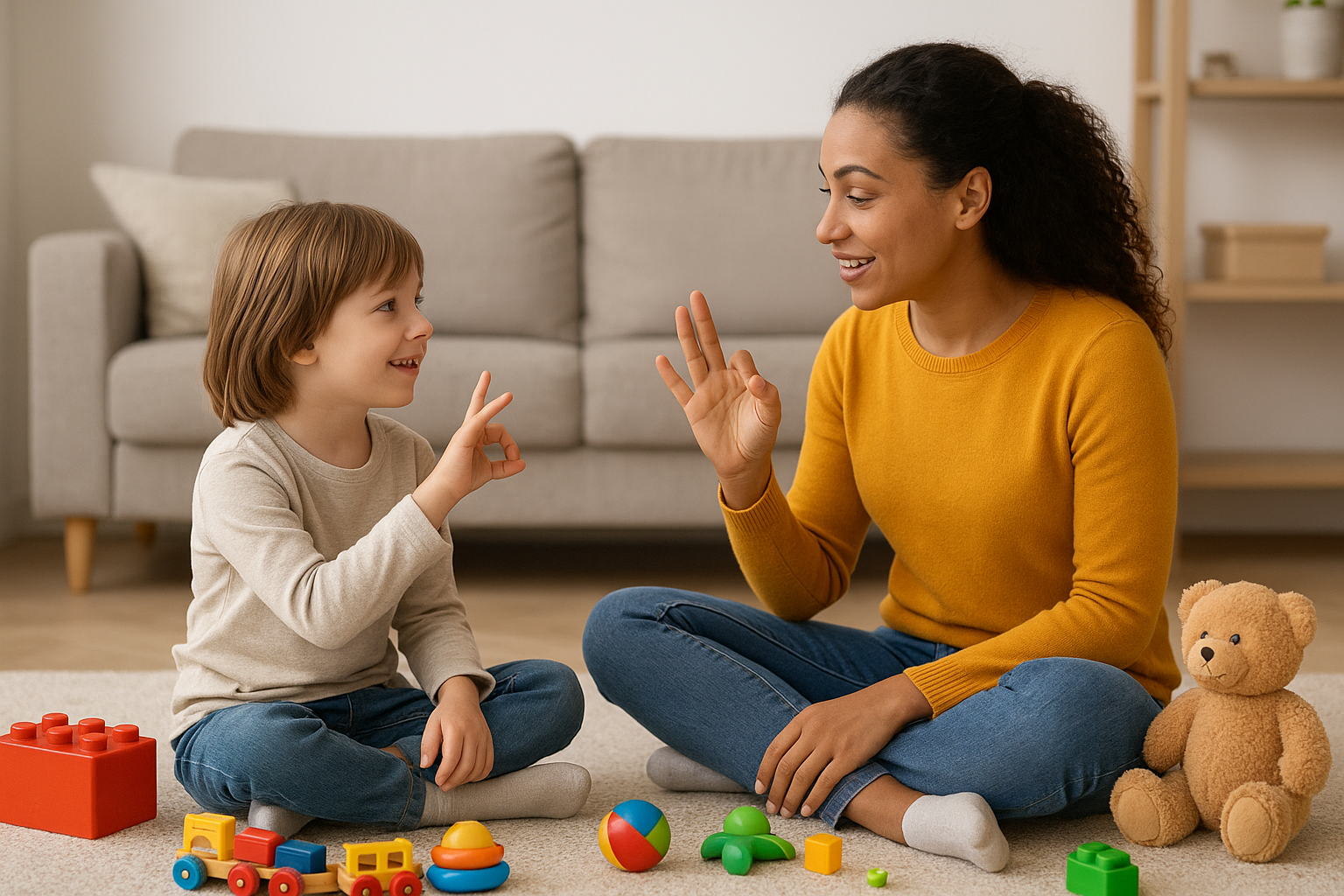
- Gestures and Signs: Your child may look, reach or point to communicate something to you. If he has been shown a signing system, such as Makaton, your child may have a specific sign or signs he can use to let you know what is on his mind.
- Body Language and Facial Expressions: Emotions are frequently communicated through body language and facial expressions; your child may stand in a particular way when he is feeling scared or vulnerable and smile when enjoying an interaction.
- Objects of Reference: Your child may bring you the car keys to indicate he wants to go for a ride in the car, or bring you his cup when he wants a drink. There are many things children can communicate with a variety of people using objects of reference.
- Pictures: Your child’s speech and language Therapist may recommend introducing your child to pictures as a form of communication. Frequently this is through the use of Core Boards or Picture Exchange Communication System (PECS). Some children use photographs of real items and some children use picture symbols, your child’s speech and language therapist can help you decide what is most effective for your child.
- Technology: Some children benefit from using voice output devices to help them communicate their message. Your child’s Speech & Language Therapist can help you decide if this is right for your child.
How Do I Use a Total Communication Approach?
A Total Communication approach involves adults modelling a variety of communication methods and systems and allowing the child to use what is most accessible to them. Children frequently use different methods of communication in different situations, so with a Total Communication Approach, the adult models how to communicate in a variety of ways and the child communicates in the way they are able in any particular situation. With a Total Communication Approach, the adult always uses the spoken word while modelling any other communication systems or strategies.
If you would like more information about using a variety of communication tools as a part of a Total Communication Approach to support your child, please see our Information & Resources page or get in touch; and sign up to our newsletter if you would like new posts sent directly to your inbox.