What are Objects of Reference?
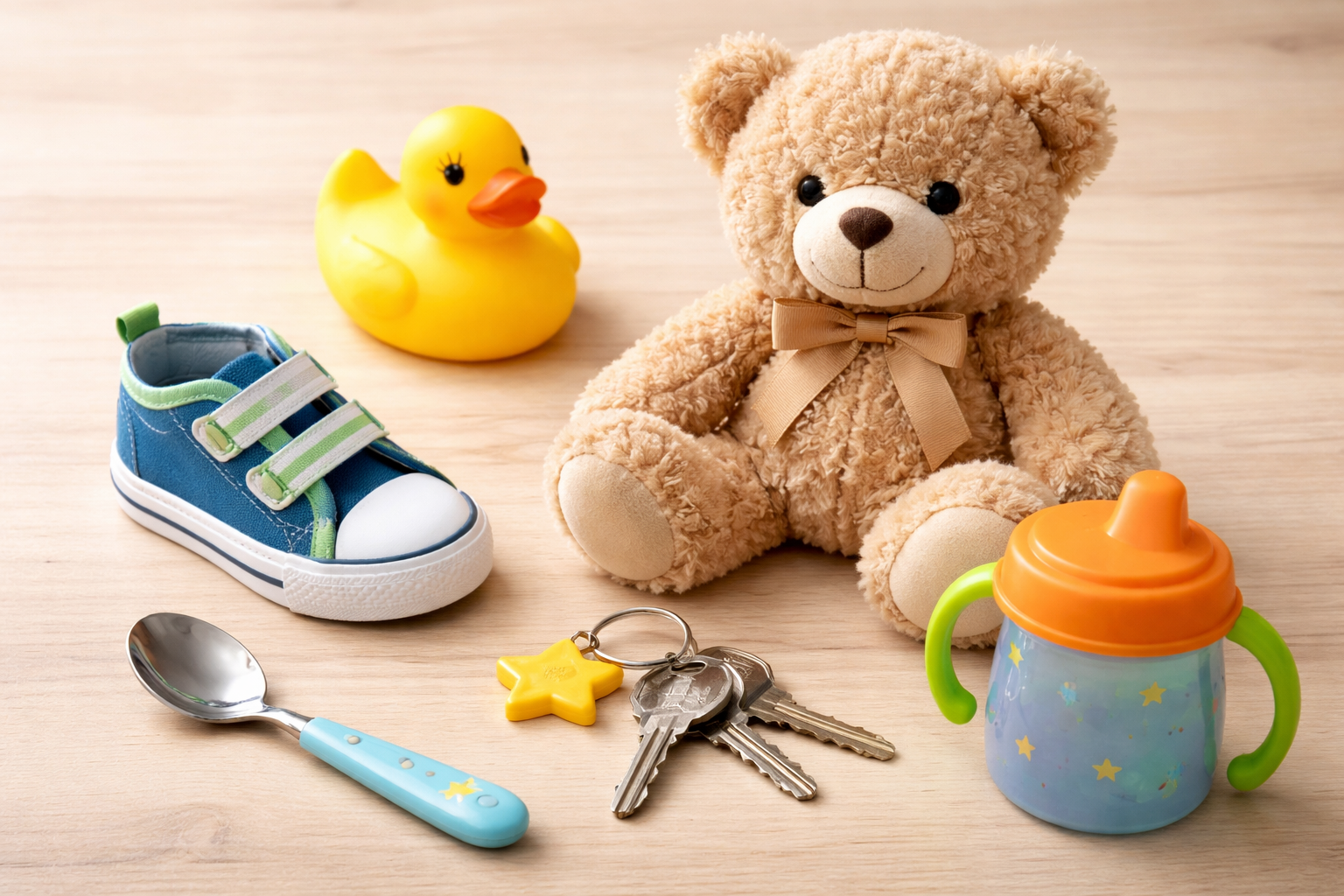
Objects of reference are objects that can be used to represent an activity, person, place or thing. They stand for something in the way that words do and can support an early communicator’s understanding and use of language.
Why Use Objects of Reference?
Objects of reference help children link a spoken word with an object and activity. As children create this link, they are better able to anticipate what is happening next, understand words being said around them, and show others what they want. By giving meaning to familiar objects and using them consistently, we create clearer, more predictable opportunities for interaction and support the development of early communication skills.
How to Use Objects of Reference
Start by thinking about the important, regular events in your child’s life. For many young children this involves things like eating, nappy changes, going outside, and bath time. Think about what objects you routinely use alongside these activities (e.g. a spoon when eating, shoes for going outside, etc). This is going to be your child’s ‘object of reference’ for this activity.
Each time the activity occurs show your child the corresponding object while labelling and starting the activity. For example, when it is time to eat, show your child the spoon and say ‘time to eat’ while bringing your child and the spoon to the table. Make sure you use the same object and word(s) each time, and let your child hold and explore the object.
Things to Keep in Mind
- Start with a few objects and increase your child’s objects of reference vocabulary as they show increased understanding.
- If your child spends time at nursery or other education setting or is looked after by other people, use the same objects of reference in each situation. It can be useful for each setting to have their own copies of the objects.
- Choose distinct objects for each situation that your child uses each time they are in that situation (e.g., if you only put bubbles in the bath some of the time, use the rubber duck that is always in the bath or your child’s flannel or bath towel instead of bubbles to represent bath time).
- Once your child understands objects of reference, he may choose to bring an object to you to make a request, for example, he may bring you his cup to request more water. This is a valid early communication request and when possible should be honoured.
If you would like more information about supporting children’s language development, please get in touch. Follow us on Facebook for more speech, language, and feeding tips, and sign up for South Lakes Speech & Language Therapy’s newsletter if you would like new posts sent directly to your inbox.