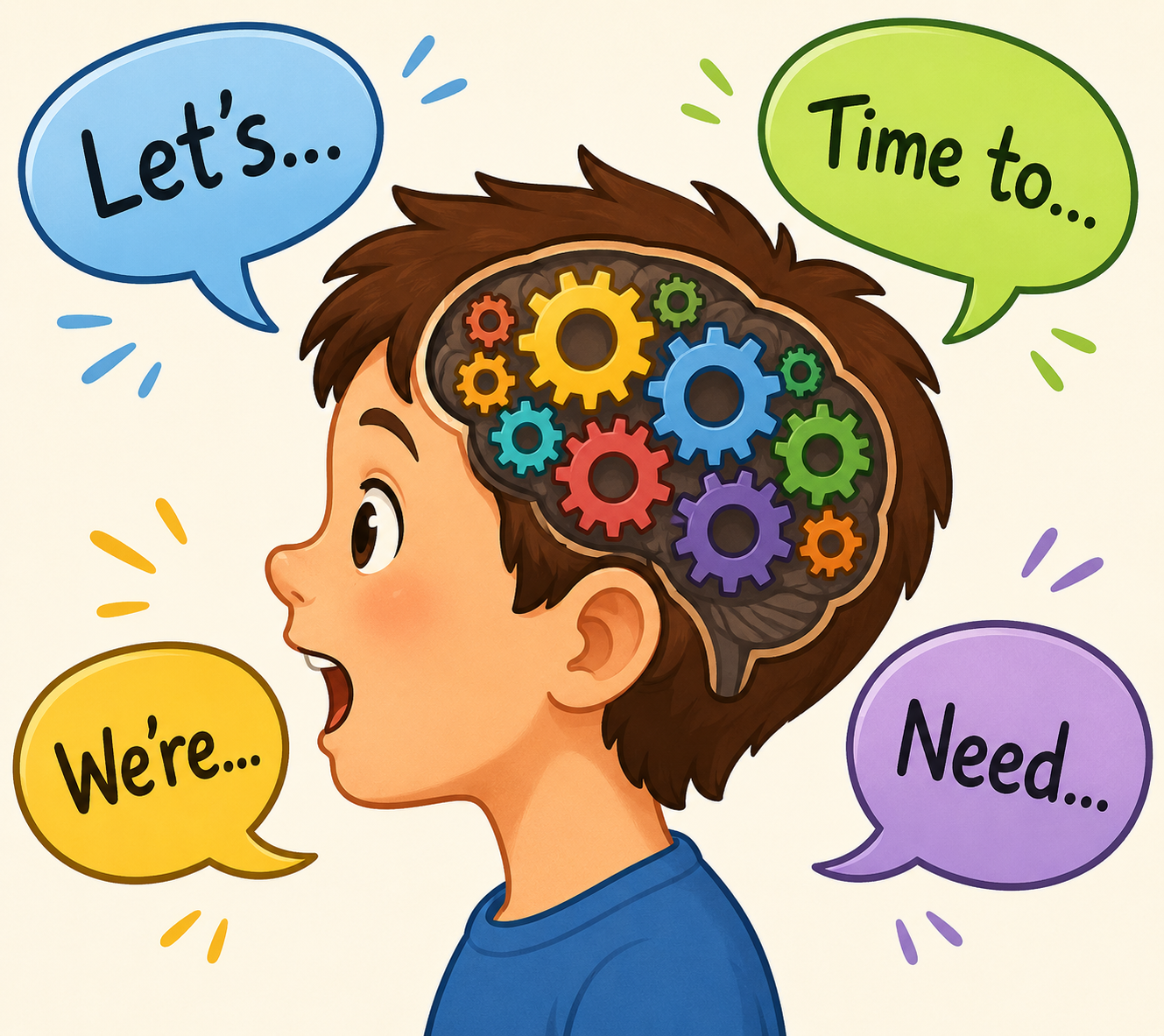
Many of us who work in early child development recognise that there are two ways of learning language, Analytic and Gestalt Language Learning (also called Gestalt Language Processing or GLP). Children who are Gestalt Language Learners learn language in chunks and in the early stages are fairly rigid in their use of language. They attach meaning to whole chunks of language instead of meaning to individual words.
When supporting a child who is learning language as gestalts, we use specific strategies to help them learn a variety of gestalts and eventually break their gestalts down into individual units of meaning that can then be mixed and matched to generate flexible language. It is key that children learn gestalts that are easily broken down; these are called mitigable gestalts, and sometimes thinking of a variety of easily mitigable gestalts to introduce to a child during play and daily activities is the most challenging part of supporting a gestalt language learner. So here is a list to get you started!
| Possible Gestalts | Possible Mitigated Versions |
| Let’s… | Let’s go! Let’s eat. |
| Need … | Need hug. Need book. |
| We’re… | We’re going to the park. We’re tired. |
| Time (to / for)… | Time to sleep. Time for bath. |
| We love… | We love biscuits. We love cars. |
| How about… | How about crisps. How about some help. |
| That’s… | That’s noisy. That’s a green one. |
| It’s… | It’s stuck! It’s big! |
| It’s my… | It’s my favourite! It’s my car! |
| It feels… | It feels different It feels wet. |
| Come on… | Come on help! Come on jump. |
| I’m thinking about… | I’m thinking about crisps. I’m thinking about shoes on. |
| I’m going to / I’m gonna… | I’m going to colour. I’m going to eat snack. |
| Where’s… | Where’s baby? Where’s drink? |
| What’s… | What’s next? What’s this? |
| I’m so… | I’m so happy! I’m so hungry. |
| I see… | I see juice. I see blocks. |
| We gotta… | We gotta go! We gotta jump! |
| Wanna do… | Wanna do park. Wanna do iPad. |
| It’s too… | It’s too noisy. It’s too busy. |
| I’m having… | I’m having fun! I’m having crisps. |
Keep in mind that not all gestalts you model will be meaningful to your child, and if a gestalt is not meaningful, a child is not likely to add it to their spoken vocabulary. We suggest focusing on two to three gestalts at a time and modelling these repeatedly during a variety of activities and situations with your child across several days. Using a sing-song voice that is full of emotion and intonation can help gestalt language learners learn language, so don’t be afraid to use emotion in your voice when modelling gestalts for your child.
If you have a gestalt to add to the list or would like more information about children’s language development, please get in touch. Follow us on Facebook for more speech, language and feeding tips and sign up for South Lakes Speech & Language Therapy’s newsletter if you would like new posts sent directly to your inbox.