

Research has found that between 25% and 45% of typically developing children struggle with feeding at some point during childhood,1 but how do you know if your child’s feeding difficulties are a phase they will out grow or something for which they need specialist support?
Firstly, it is important as a parent to trust your instincts. You know your child best and if you are worried or feel that feeding your child is more challenging than it should be, seek support.
Alongside parental intuition, there are clear red flags2 that indicate specialist support may be needed.
If your baby or child displays any of the signs below, seek advice from a paediatric feeding specialist.
- Ongoing poor weight gain (dropping centiles on the growth curve) or weight loss.
- Wet, gurggly sounds and/or a change in breathing noises following food or drink.
- Regular coughing, spluttering, or gagging with food or drink.
- Repeated chest infections and/or respiratory issues not explained by a medical diagnosis.
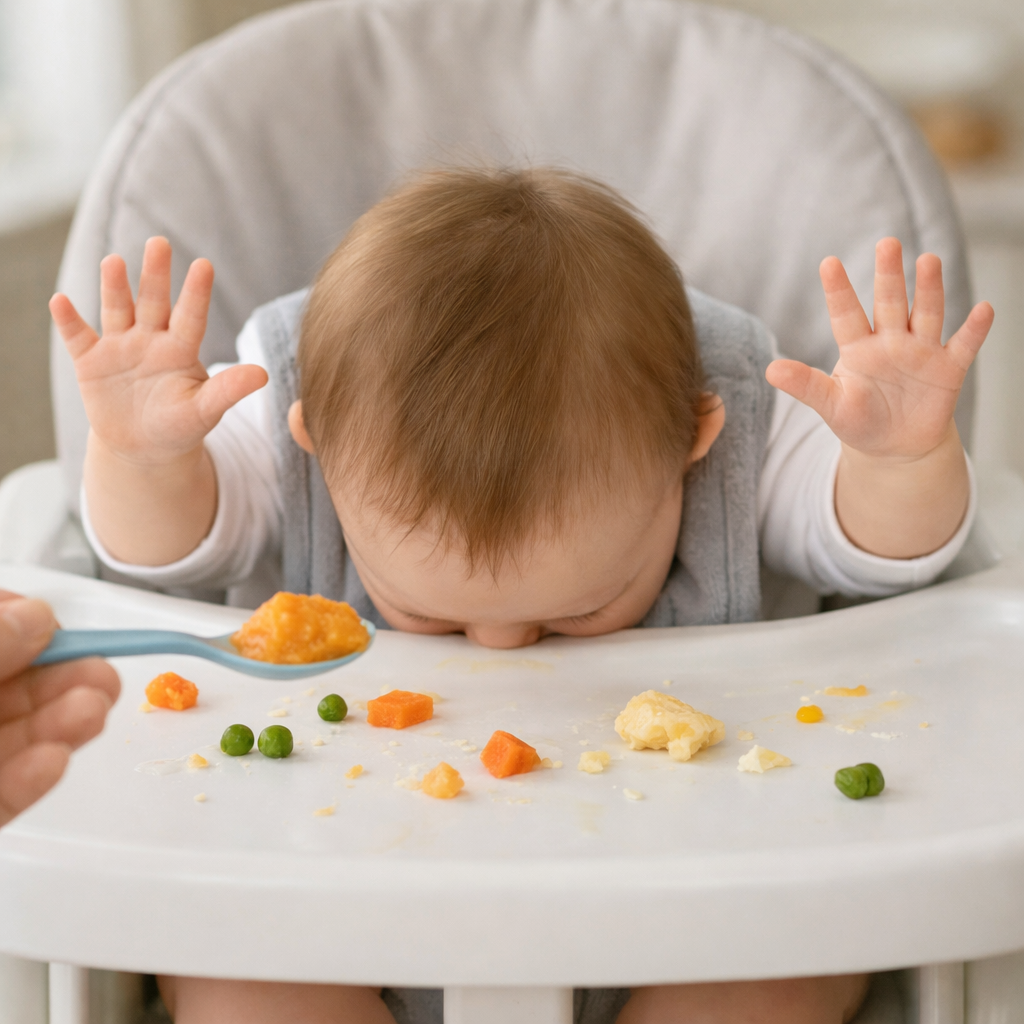
- Regularly taking a long time to eat and/or unable to take enough calories orally to grow.
- Regular crying and/or back arching around milk feeds or regular refusal of milk feeds.
- Unable to transition to puree foods by 10 months of age.
- Unable to accept any table foods by 12 months of age or unable to accept primarily table foods by 16 months of age.
- Unable to transition to cup drinking by 16 months of age.
- A traumatic choking event or a choking episode that required intervention to resolve.
- Eats less than 20 foods.
- Dropping previously enjoyed foods from their repetoire.
- Refusing foods based on sensory properties (e.g., colour, texture, etc.) or avoiding all foods in a nutritional group (e.g., meat, vegetables, starches, fruits, etc).
- Only accepting brand specific foods and/or only accepting processed, packaged foods.
- Often unhappy around mealtimes: crying, yelling, fighting, stressed or anxious.
- Unable to join in family mealtimes and/or as a parent you feel that mealtimes are a battle.
Children who struggle with feeding can make good progress with feeding therapy and the earlier the better (it is easier to change a child’s relationship with food in the younger years when the relationship is still being formed).
When looking for a feeding therapist, make sure your child’s therapist specialises in feeding therapy with children (feeding therapy with adults is different!). It also is important that your child’s feeding therapy involves the whole family (in order for your child to make progress, you need to know how to facilitate their progress and support them to practice their new feeding skills at family meals!).
If you have questions about children’s feeding or concerns for your child, please get in touch. Follow us on Facebook for more speech, language and feeding tips and sign up for South Lakes Speech & Language Therapy’s newsletter if you would like new posts sent directly to your inbox.