
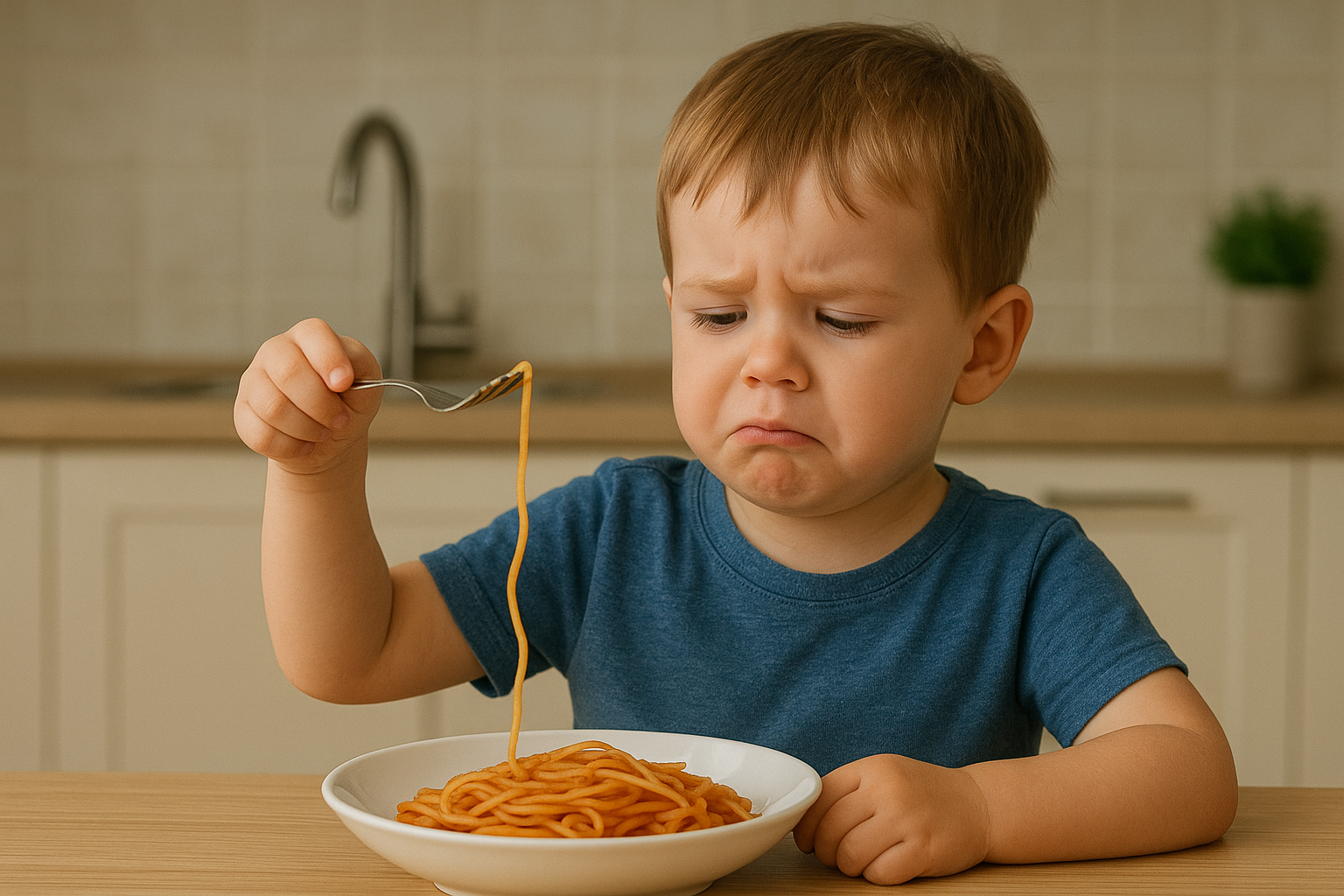
If mealtimes feel like a negotiation, you are not alone. Studies estimate that anywhere from 6 to 50% of children are picky eaters at some point, most commonly between the ages of two and six; however, for some children, picky eating persists into adolescence or adulthood.1
Understanding why your child is reluctant to eat certain foods can make mealtimes feel less stressful and help you respond with greater confidence. Below we explore some of the reasons behind picky eating.
Neophobic Response
For people who subscribe to the theory that picky eating is a neophobic response, it makes sense that children would be selective with food, the survival of our species may depend on it!
According to this theory, picky eating peaks around 18 months of age. This coincides with the age at which most children are walking and able to move away from their parents. By 18 months a child also has honed their fine motor skills and is able to pick up items of varying size and shape. From an evolutionary standpoint picky eating, or a fear of eating new food, is an important protective measure that keeps children safe from eating poisonous berries and other unsafe foods and objects that they may come across as they explore the world around them.
Genetics and the Environment
A twin study found that both genetics and the early feeding environment (i.e. the foods offered at an early age) shape children’s feeding behaviour.2 A key takeaway from this study is that children who are offered a wide variety of food from a young age, and regularly see their parents eat a wide variety of food, have better feeding outcomes.
Decreased Growth Rate
Babies grow incredibly fast during their first year of life. This growth slows as they reach toddlerhood and it follows that proportionally a toddler’s body needs less food to fuel their more slowly growing body. Proponents of this theory suggest that what adults may class as picky eating may be nothing more than a toddler responding to the adjusting calorie needs of their bodies.
Toddler Independence
As children reach toddlerhood, they experience a growing sense of independence. Parents may notice that their toddler is less cooperative than they previously were with daily tasks such as dressing, getting into their car seat or pram, and going to bed. Refusing food is another way for a toddler to assert themselves and explore their growing desire for independence. This, paired with a toddler’s natural resistance to transitioning away from an activity they are enjoying in order to come to the table for a meal, may make participating in mealtimes challenging.
Medical or Developmental Conditions
Children with certain medical or developmental conditions are at an increased risk of feeding difficulties. Diagnoses associated with an increased risk of ‘picky eating’ include:
- Prematurity
- A History of Cardiac Problems (particularly if from birth)
- Gastrointestinal Difficulties including Significant Reflux
- A History of Aspiration or Swallowing Problems
- Neurodevelopmental Differences including Autism and Down Syndrome
- Developmental Delay
Anxiety
Children who have experienced a choking event or who have high levels of anxiety may become anxious about mealtimes and swallowing. They may believe that certain foods are safer and feel comfortable only eating ‘safe’ foods.
Skill Deficit
Eating a variety of food textures requires children to have well developed biting, chewing and swallowing skills. It involves synchronisation of lip, tongue and jaw movements and a coordinated and timely swallow. Children who have not yet developed these skills may appear to be picky eaters, but they actually are responding to the limitations of their oral motor system.
Sensory System Preference
All of us have sensory systems and we all adjust how we interact with the world based on our sensory systems and sensory preferences. Toddlers are no different, but they are less nuanced in how they express their sensory needs. Eating and mealtimes involve all of our senses and when a child’s sensory system is not comfortable with the food on offer, parents may describe them as a picky eater.
Sensory systems involved in mealtimes include:
- Taste – Food comes in a variety of flavours and not all flavours are enjoyed by all sensory systems.
- Touch – Meals can be messy and foods come in a variety of textures – puree, lumpy, sticky, crunchy, wet, dry, etc. Some sensory systems struggle with texture variation.
- Sound – Some children’s sensory systems find it challenging to hear other people eat as well as hear the sound of their own chewing.
- Sight – Whether or not a food and how it is presented is visually appealing (colour, shape, quantity, etc.) varies greatly among individuals.
- Smell – The smell of the food being served as well as the smell of the mealtime environment can be challenging for some children’s sensory systems.
- Interception – A child’s interception, or how they perceive and understand their hunger and fullness cues, can impact what and when they eat.
- Vestibular – A child’s vestibular system manages how their body is balanced and feels in space. Children whose seating is not appropriately supportive, may struggle to remain at the table. Vestibular systems are also impacted by ear infections and other middle ear issues meaning a child who has an earache may be less likely to be interested in eating.
The Modern World
Recent research suggests that picky eating in childhood did not exist before the 20th century.3 The author believes that there are two primary influences from the modern world that encourage picky eating in childhood:
- 1) Food manufactures introducing and heavily marketing children’s snacks and specific children’s foods.
- 2) Modern food is more shelf stable, and an increased amount of food processing now happens in factories and shops, meaning each family member can eat a different food at a mealtime without concern that uneaten food will go bad before the next meal.
Support for Picky Eating
Support is available for picky eating. Many children and families benefit from support around mealtime expectations and how to offer food to increase their child’s acceptance of different foods. Children with skill deficits will need therapy targeted at the development of oral motor skills and children who are anxious around mealtimes, may need support to help them feel calm around food. For children with unresolved medical issues, such as reflux, they may need medical intervention to help mealtimes become more comfortable. Feeding therapy that is tailored to the specific needs of your individual child and family can make a big difference in your child’s feeding journey.
If you have concerns for picky eating in your child or questions about feeding therapy with South Lakes Speech & Language Therapy, please get in touch. Follow us on Facebook for more speech, language and feeding tips and sign up for South Lakes Speech & Language Therapy’s newsletter if you would like new posts sent directly to your inbox.
- Midwestern University ↩︎
- Food fussiness and food neophobia share a common etiology in early childhood
Andrea D. Smith, Moritz Herle, Alison Fildes, Lucy Cooke, Silje Steinsbekk, and Clare H. Llewellyn ↩︎ - Veit, H. Z. (2026). Picky: How American children became the fussiest eaters in history. St. Martin’s Press. ↩︎