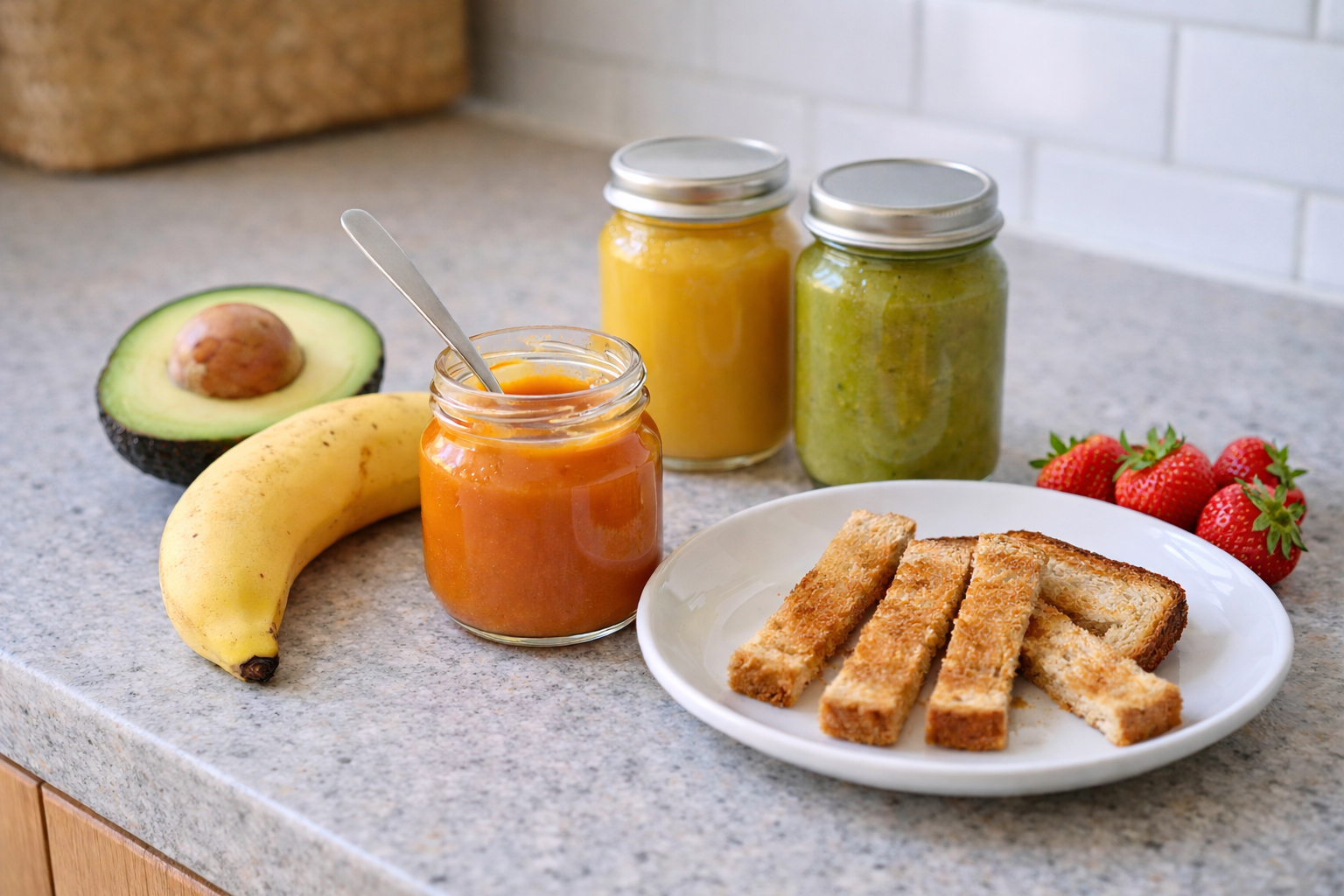
When it comes to introducing solids to your baby, there are three approaches: Traditional Weaning, Baby-Led Weaning, and Combination Weaning. All are equally valid approaches to weaning and come with unique pros and cons.
Traditional Weaning
With traditional weaning, the parent is in control of what goes to baby’s mouth and feeds baby (usually) from a spoon. Foods served are usually puree or mashed and may be homemade and/or store bought.
Pros:
- There is less mess when the parent controls the food.
- There is less waste as most food goes in baby’s mouth or can be saved in a jar for the next meal.
- If using homemade baby foods (including family meals blended down), baby has the opportunity to enjoy family food flavours from the start.
Cons:
- Baby may not learn fullness cues because when the parent controls the food, baby has less option of when to eat or not eat.
- Higher risk of baby being over fed and inadvertently reducing their milk feeds sooner than nutritionally appropriate.
- Baby has less opportunities to explore food textures with their hands which is important for helping baby accept a variety of food textures to their mouth.
Baby-Led Weaning
Families following the baby-led weaning approach allow baby to self-feed from the first bite. Traditionally thought of as starting with finger foods, baby-led weaning also includes puree and mashed foods that baby feeds themselves from their fingers or a pre-loaded spoon.
Pros:
- Appetite control – baby learns to follow their own hunger and fullness cues and is in control of how much they eat (less risk of over feeding).
- Baby explores foods with their hands from the start which supports babies to accept a variety of foods to their mouth.
- In many situations, baby can have the same food as the rest of the family, supporting family mealtimes from the start.
Cons:
- When baby controls the food, things will get messy.
- There is likely to be more food dropped on the floor and in baby’s hair leading to food waste.
Combination Weaning
Combination weaning is exactly what the name implies, a mixture of traditional and baby-led weaning. As a parent you choose the aspects of each method that work best for you and follow the weaning approach that fits your mealtime situation.
Pros & Cons:
- Same pros and cons as with traditional and baby-led weaning.
How you feed your baby is a personal decision and all three approaches are likely to result in a happy, healthy eater; so do what works best for you and your baby!
If you have questions about children’s feeding or concerns for your child, please get in touch. Follow us on Facebook for more speech, language and feeding tips and sign up for South Lakes Speech & Language Therapy’s newsletter if you would like new posts sent directly to your inbox.
Please note that this article is for information purposes only and was written with typically developing babies in mind. If your baby has a medical or developmental condition that puts them at increased risk for feeding issues, please speak with your child’s healthcare provider about how best to approach weaning, appropriate foods to offer, and any eating, drinking or swallowing concerns.