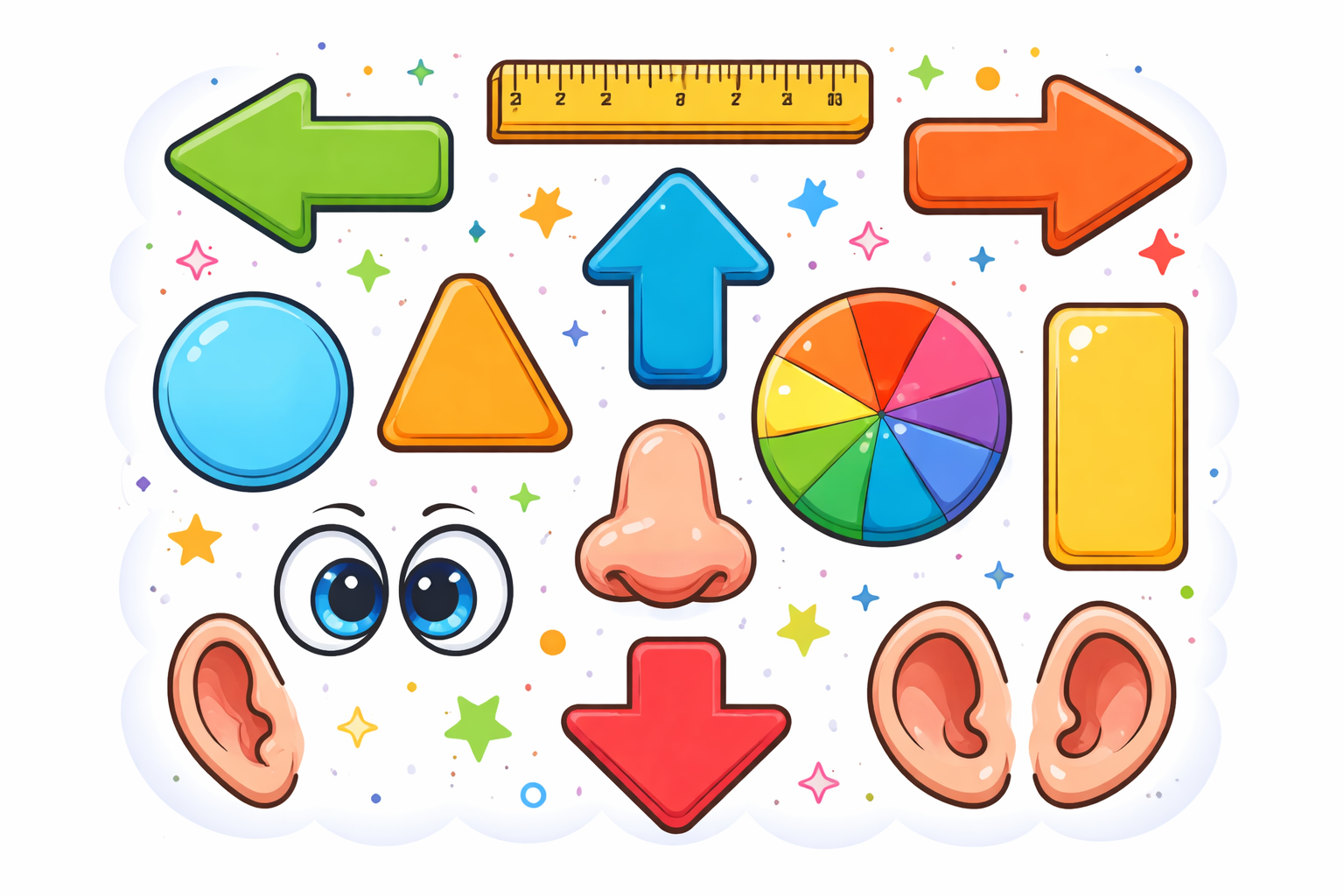
Understanding basic concepts is an important part of language development. It supports a child’s ability to process information, organise their thoughts and solve problems; and understanding basic concepts is key to following instructions in an education setting. One of the top things you can do to help your child prepare for classroom-based learning is practise basic concepts.
The list below includes basic concepts that children should understand by the time they enter primary school. (Concepts are loosely listed in developmental order.)
| Big / Little | Top / Bottom | In Order |
| Hot / Cold | Down / Up | Pair |
| Wet / Dry | Heavy / Light | As Many As |
| In / On | Over / Under | Equal |
| Happy / Sad | Wrong / Right | Old / Young |
| Dirty / Clean | Before / After | Thick / Thin |
| Soft / Hard | Above / Below | Forward / Backward |
| Full / Empty | Difficult / Easy | Colours |
| Fast / Slow | Old / New | High / Low |
| Quiet / Noisy | Always / Never | Early / Late |
| Long / Short | Finish / Start | Near / Far |
| Behind / In Front / Next To | All / None | Rough / Smooth |
| Same / Different | Together / Apart | Whole / Half |
| Tall / Short | Light / Dark | Deep / Shallow |
| Outside / Inside | Front / Back | Corner / Centre |
| Large / Small | More / Less | Toward / Away |
| First / last | Wide / Narrow | Sharp / Dull |
| Open / Close | Many / Few | End / Middle |
If you would like more information about language development in children, please get in touch. Follow us on Facebook for more speech, language, and feeding tips, and sign up for South Lakes Speech & Language Therapy’s newsletter if you would like new posts sent directly to your inbox.