Parent Resources
-
Words are the building blocks of communication! Every time your child learns a new word, they gain another way to understand the world, share their thoughts and feelings, and connect with the people around them. Children need to understand and… Read more
-
Words are the building blocks of communication! Every time your child learns a new word, they gain another way to understand the world, share their thoughts and feelings, and connect with the people around them. Children need to understand and… Read more
-
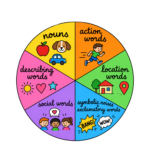
Words are the building blocks of communication! Symbolic noises and exclamatory words are usually a child’s earliest word approximations and count as first words making them an important part of your child’s speech and language journey. So, what are symbolic… Read more
-
Words are the building blocks of communication! Every time your child learns a new word, they gain another way to understand the world, share their thoughts and feelings, and connect with the people around them. As a child nears their… Read more
-
If your child struggles with their speech, you may have come across the terms phonological process and phonological disorder and wondered, ‘What is the difference?’ and ‘Does my child need speech therapy to fix their speech?’. Knowing when a speech… Read more
-
Attention and listening skills are the foundation for communication and essential throughout a person’s life. Try the games below for some fun practice with attention and listening skills in the classroom, or adapt these games for use at home! 1.… Read more
-
Understanding basic concepts is an important part of language development. It supports a child’s ability to process information, organise their thoughts and solve problems; and understanding basic concepts is key to following instructions in an education setting. One of the… Read more
-
Does your child mispronounce some sounds when speaking? Do you wonder whether their speech is age-appropriate? While there is variability in children’s mastery of speech sounds, there are general guidelines for ages at which most children can pronounce specific sounds… Read more
-
What is Semantic Categorisation and Why is it Important? Semantic categorisation is the process of grouping words based on their shared meaning, concepts, or semantic features. Understanding how words fit into different semantic categories is an important part of developing… Read more
-
Have you ever wondered whether your child’s speech is as clear as the speech of other children their age, and whether or not it is normal that you can understand everything your child says but aunt Sheila understands almost nothing… Read more
AAC Articulation Attention Baby Communication Communication Top Tips & FAQs Early Communicator Executive Function Expressive Communication Feeding Feeding Top Tips & FAQs Gestalt Language Learning Late Talker Makaton Oral Motor Picky Eating Preschool Age Receptive Communication School Age School Strategies Selective Mutism Sign Language Social Communication Speech Stammering & Stuttering Toddler Visual Communication Aids Weaning