
“For… (infants and children with PFD), every bite of food can be painful, scary, or impossible, potentially impeding nutrition, development, growth, and overall well-being.”1
Mealtimes can be challenging for many families, but when eating or drinking becomes a persistent struggle, it can be worrying and exhausting for both children and parents. Paediatric Feeding Disorder (PFD) is a diagnosis that describes ongoing difficulties with eating or drinking that can affect multiple aspects of a child’s life. Understanding what PFD is, why it happens, and how it can be supported can help parents better understand their child’s eating challenges and feel more confident in finding the right help for their child.
What is PFD?
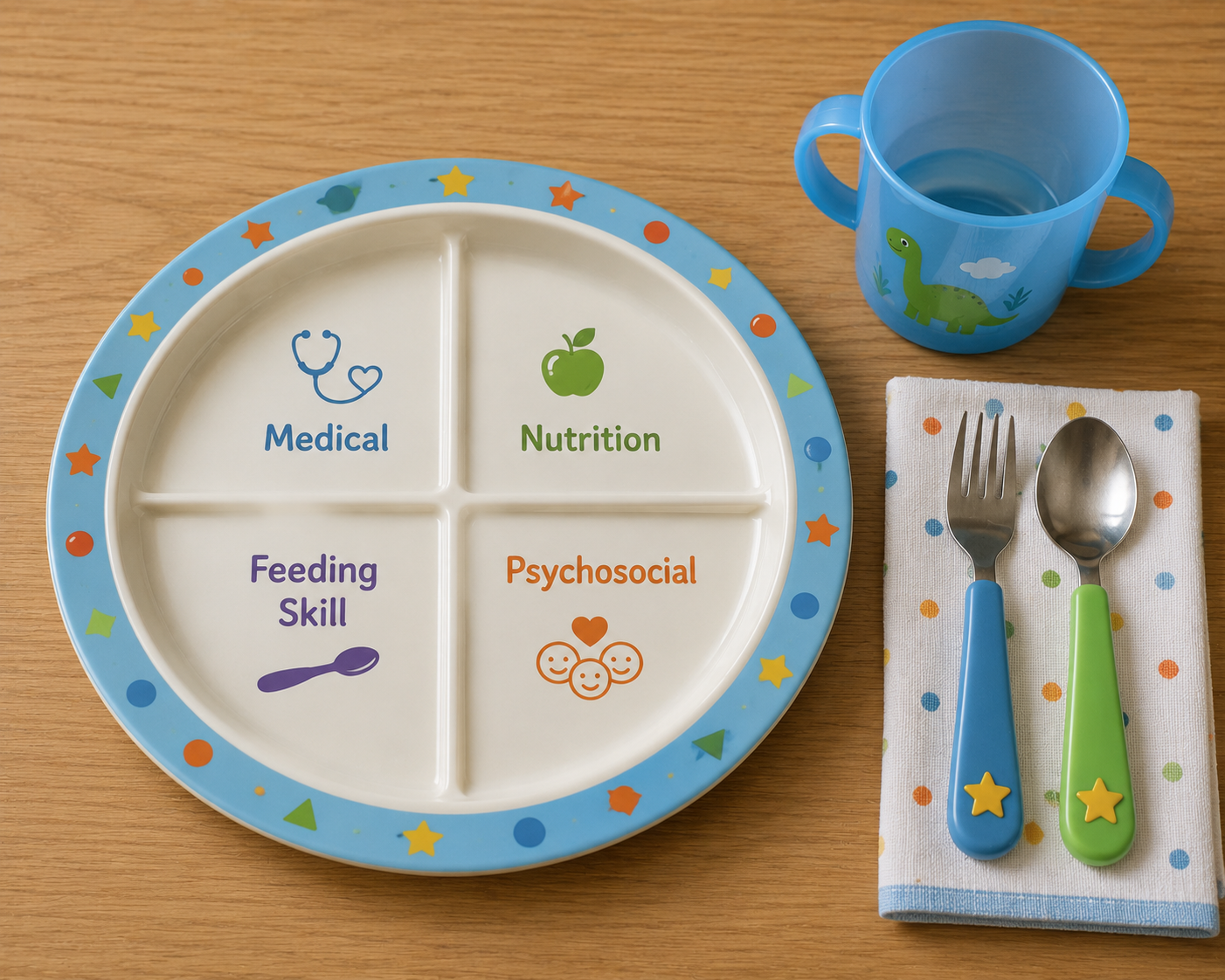
PFD, or Paediatric Feeding Disorder, is impaired oral intake that is not age-appropriate and is associated with feeding dysfunction in one or more of the following domains:2
- Medical – Eating is a complex task that involves the coordination of our body’s organs, nerves and muscles. Certain medical conditions can impact a child’s ability to eat successfully and are linked to PFD. Examples include: gastrointestinal, airway and cardiac issues.
- Nutritional – Many children with PFD, as a function of their individual eating pattern, have a restricted quantity and/or variety of food and drink, which places them at nutritional risk.
- Feeding Skill – Learning to eat requires well developed sensory and oral motor skills which support an infant or child’s ability to suck, swallow, bite, and chew. Children with PFD are at increased risk of feeding skill deficits which may include a child’s oral motor and swallowing skills as well as the social, communication, and interactive skills that integrate with mealtime skills.
- Psychosocial Dysfunction – A child’s interactions with other people during mealtimes are impacted by their response to food and other people’s responses to their mealtime behaviours. Over time, regular mealtime challenges can impact a child’s relationship with food and people at the table and vice versa. It can also make it challenging for a child to participate in social activities that involve food. For parents, feeling unsure of how to respond to their child’s mealtime behaviours and feeding challenges adds to the stress and difficulties around food.
Isn’t it Just Picky Eating?
No, PFD is not the same as picky eating. Children who are picky eaters may refuse some foods; however, a picky eater still feels hunger and wants to eat.
Children with PFD do not necessarily feel hunger cues in the same way as others and are not necessarily motivated to eat; they are at risk of refusing food to the point of starvation. For children with PFD, their feeding difficulties are usually linked to underlying historical or on-going complex medical and/or developmental conditions and their feeding difficulties impact on their daily lives. PFD is more than picky eating.
How is PFD Diagnosed?
PFD is a multi-disciplinary diagnosis and may be diagnosed by any member of your child’s medical team who identifies a feeding dysfunction in one or more of the four PFD domains. PFD is usually diagnosed in early childhood and is a stand alone diagnosis, although some children with PFD will also meet the criteria for a diagnosis of ARFID (Avoidant/Restrictive Food Intake Disorder).
What is the Treatment for PFD?
Treatment for PFD must be tailored to the individual child and their specific challenges. Depending on the domain(s) in which a child has feeding dysfunction, they may need targeted feeding therapy to address delayed feeding skills and/or sensory system challenges. There may be specific medical diagnoses, such as reflux, that need to be treated and the family unit may need advice and support around re-structuring meals to support and include all family members. Many children with PFD find several aspects of food and mealtimes challenging and benefit from a multi-faceted approach.
Because parents are key in supporting a child’s ability to learn new skills during home mealtimes, treatment for PFD needs to involve a child and their parents. Your child’s feeding therapist likely will help you learn new ways to introduce, think, and talk about food to support your child’s feeding. If you child is in an education setting or cared for by other adults, it will be important that they also are aware of the feeding strategies being put in place to support your child.
As a part of your child’s PFD diagnosis, a member of their medical team should monitor their growth and nutrition and prescribe calorie and/or nutritional supplements if appropriate. It is important that all healthcare providers working with your child are familiar with PFD and have an understanding of how to support children with this diagnosis. Treatment should be a team approach with you and your child key members of the treatment team.
If you have questions about feeding your child or feeding therapy with South Lakes Speech & Language Therapy, please get in touch. Follow us on Facebook for more speech, language and feeding tips and sign up for South Lakes Speech & Language Therapy’s newsletter if you would like new posts sent directly to your inbox.
- Feeding Matters ↩︎
- Goday PS, Huh SY, Silverman A, Lukens CT, Dodrill P, Cohen SS, Delaney AL, Feuling MB, Noel RJ, Gisel E, Kenzer A, Kessler DB, de Camargo OK, Browne J, Phalen JA. Pediatric feeding disorder: consensus definition and conceptual framework. JPGN 2019;68(1):124-129. ↩︎