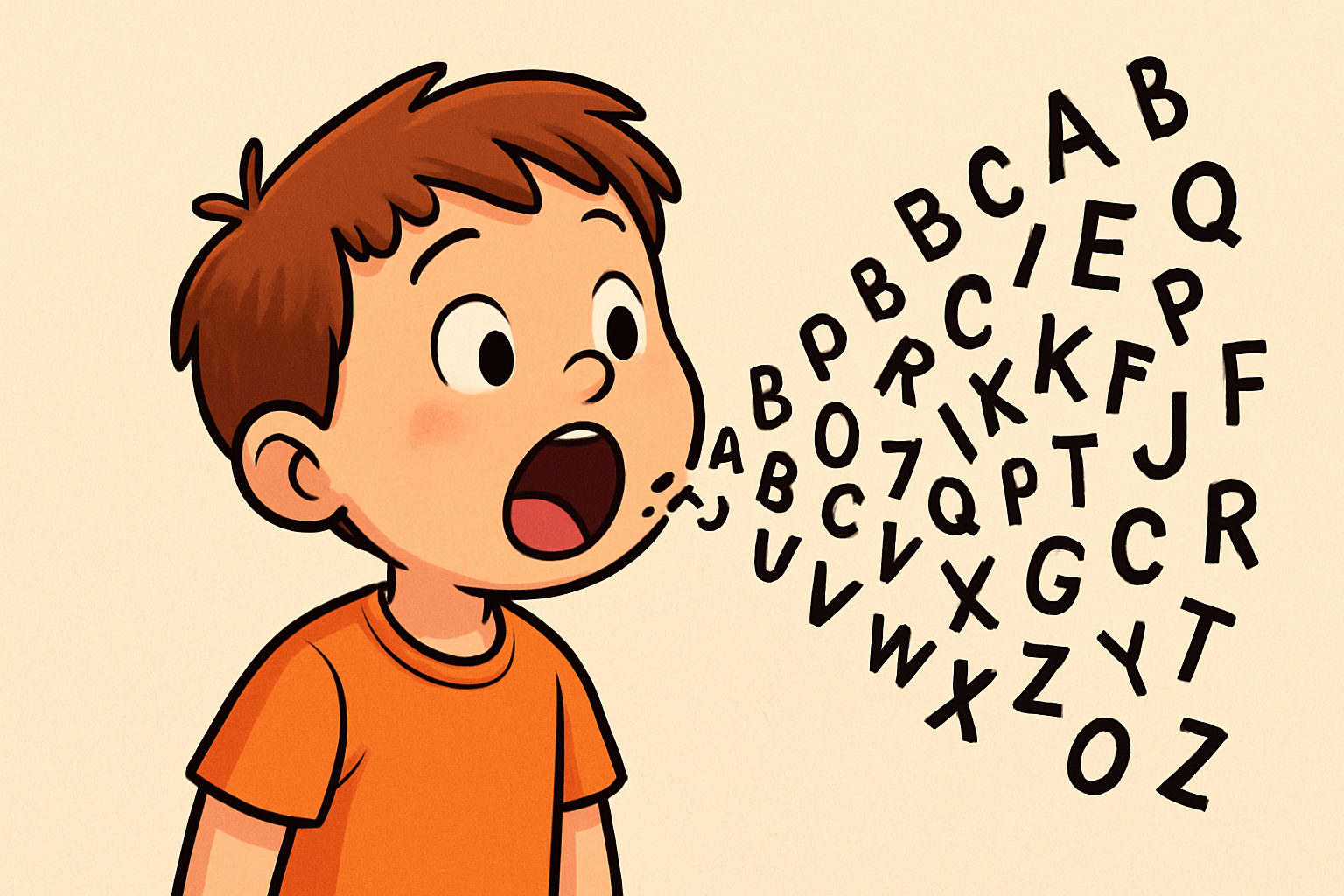
If your child struggles with their speech, you may have come across the terms phonological process and phonological disorder and wondered, ‘What is the difference?’ and ‘Does my child need speech therapy to fix their speech?’. Knowing when a speech pattern is a part of typical development and what speech patterns are expected for your child’s age will help you understand whether your child needs support from a Speech and Language Therapist.
There is a Difference
A phonological process is a pattern of speech sound errors that young children use to simplify speech when they are developing language. It is a normal part of learning to speak and, for children with typical speech, phonological processes will resolve on their own.
A phonological disorder is when a phonological process is used past the age of elimination or when a child uses an atypical phonological process. Children who have a phonological disorder, struggle to understand the sound system and rules surrounding speech. Although most children naturally learn these rules, children with a phonological disorder need to be directly taught how to use their sound system and speech sound rules.
The Specifics
The table below lists common phonological processes young children frequently use when learning to speak and the age by which children typically stop using the pattern (age of elimination).1 These phonological processes are a part of typical speech development; however, a child using a phonological process beyond the age of elimination may need support from a Speech and Language Therapist. This list is not exhaustive.
| Phonological Process | Definition | Example | Age of Elimination |
| Reduplication | When a syllable in a word is repeated | ‘wawa‘ for ‘water‘ | 2.5 to 3 years |
| Final Consonant Deletion | The final consonant of a word is omitted | ‘bu’ for ‘bus“ | 3 years |
| Assimilation | A consonant sound in a word is changed to be more similar to another consonant sound in the word. | ‘gog’ for ‘dog’ | 3 years |
| Stopping | A sound made with airflow is substituted for a sound made by stopping airflow. | ‘tee’ for ‘see’ | 3 to 4 years |
| Fronting | A sound made in the back of the mouth is replaced by a sound made in the front of the mouth. | ‘tat’ for ‘cat’ | 4 years |
| Weak-Sylable Deletion | An unstressed syllable in a word is deleted. | ‘nana’ for banana’ | 4 years |
| Cluster Reduction | A consonant cluster is simplified into a single consonant. | ‘top’ for stop | 4 to 5 years |
| Gliding | R and L are replaced by W and Y | ‘wabbit’ for ‘rabbit’ ‘yeg’ for ‘Leg’ | 6 to 7 years |
The table below lists atypical phonological processes sometimes seen in children with a phonological disorder.1 Children displaying these phonological processes at any age should be assessed by a Speech and Language Therapist. This list is not exhaustive.
| Phonological Process | Definition | Example |
| Initial Consonant Deletion | The initial consonant of a word is omitted | ‘og’ for ‘dog’ |
| Backing | A sound made in the front of the mouth is replaced by a sound made in the back of the mouth. | ‘goo’ for ‘two’ |
| Glottal Replacement | A glottal stop (-) is substituted for a consonant in the word. | ‘ha – er’ for ‘hammer’ |
| Fricatives replacing Stops | A sound made by stopping airflow is replaced by a sound classed as a fricative. | ‘sop’ for ‘top’ |
| Stopping of Glides | A sound made by stopping airflow replaces a sound classed as a glide. | ‘des’ for ‘yes’ |
| Vowel Errors | Errors producing vowels in words. | any persistent vowel error or distortion |
Does My Child Need Speech Therapy?
By 4 to 5 years old, a child’s speech should be clear and easy to understand. Children who use phonological processes beyond the age of elimination or use atypical phonological processes should be seen by a Speech and Language Therapist. Furthermore, if your child is missing sounds from their sound system, says things in an unusual or unpredictable way, or their speech sounds like a younger child, they too may need input from a Speech and Language Therapist.
If you would like more information about phonological processes and phonological disorders in children or speech therapy with South Lakes Speech & Language Therapy, please get in touch. Follow us on Facebook for more speech, language and feeding tips and sign up for South Lakes Speech & Language Therapy’s newsletter if you would like new posts sent directly to your inbox.