What is Semantic Categorisation and Why is it Important?
Semantic categorisation is the process of grouping words based on their shared meaning, concepts, or semantic features. Understanding how words fit into different semantic categories is an important part of developing language, and strong categorisation skills help support long term memory, receptive and expressive vocabulary development, and integration of new information.
How do I Teach Semantic Categorisation?
Young children learn language best through meaningful experiences in their day to day lives. As a part of these experiences, children are exposed to new vocabulary and derive meaning through what is happening around them when words are used. As a child’s vocabulary grows, they start to see how words fit into semantic categories and this helps them organise their new knowledge. You can support your child’s semantic categorisation skills by talking about how words fit into categories in the following ways:
1. What Goes Together
Talk about what words go together (i.e. are in the same semantic category)
Example:
- Dogs, cats, fish are all pets
- Shoes, socks, hats are all clothing
- Ice cream, soup, yogurt are all things you eat with a spoon
2. What Does Not Belong
Talk about what does not belong in the group or category.
Example:
- Dog, cat, fish, cow (cow does not belong because it is a farm animal, the others are house pets).
- Shoes, socks, wellies, hat (hat does not belong because it is worn on your head, all the other items are worn on your feet).
- Football, cricket, basketball, swimming (swimming does not belong because it is not a sport played with a ball).
3. Sorting Tasks
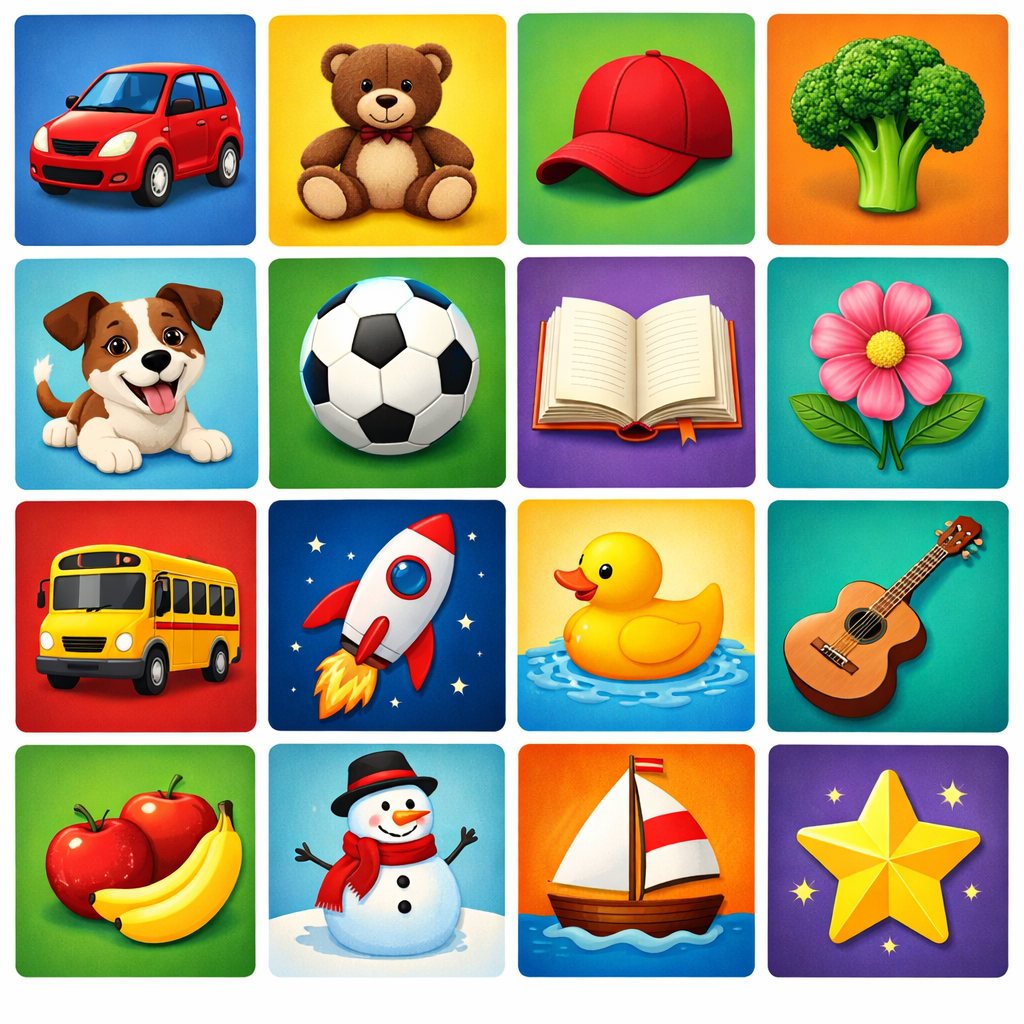
Sort household objects, pictures or written words into categories, remember an item or word can belong to more than one category.
Example:
- Category: Animals – dog, cat, cow, fish
- Category: Farm Animals – cow, horse, pig
- Category: Clothing – Shoes, socks, wellies, hat
- Category: Winter Clothing – hat, scarf, gloves, jumper
3. Convergent Naming
Give your child a list of words and have them tell you the category
Example:
- Noodles, broccoli, strawberries, yogurt are all food.
- Oranges, strawberries, grapes are all fruit.
- Kite, blocks, teddy, puzzle are all toys.
4. Divergent Naming
Give your child a category and have them list everything they can think of in that category. Examples of categories include:
- Food
- Transportation
- Toys
- Furniture
- Things that are Purple
- Things that Fly
- Movies
- Things to do in the Snow or Snow Sports
- Things with Wheels
5. Compare and Contrast
Talk about how things are the same and how they are different
Example:
- Ways a cat and a dog are the same – they both are animals, they both are house pets, they both have four legs, they both have tails, they both have fur, etc.
- Ways a cat and a dog are different – a cat has whiskers, a cat says ‘meow’ and a dog says ‘woof,’ a cat has claws and a dog has nails, a dog needs a leash when outside, etc.
Category learning can be made fun by turning it into a game with words or objects and by becoming increasingly creative with different category classes. As your child’s semantic categorisation skills increase, they may come up with a category question that stumps you!
If you would like more information about children’s language development or speech and language therapy with South Lakes Speech & Language Therapy, please get in touch. Follow us on Facebook for more speech, language and feeding tips and sign up for South Lakes Speech & Language Therapy’s newsletter if you would like new posts sent directly to your inbox.